
What is Padel and Why is Everyone Talking About It?
Before going into the Padel vs Pickleball details, let’s first look at Padel.
Across the globe, a new sound is echoing from courts in city parks, sports clubs, and residential communities: the distinct, solid pop of a padel racket connecting with a ball. Hailed as the world’s fastest-growing sport, padel has seen an explosive surge in popularity, captivating millions with its unique blend of dynamic action and social camaraderie. It is an athletic pursuit that is remarkably easy to learn yet offers a lifetime of strategic depth to master, making it accessible to players of all ages and skill levels.
However, this rapid growth has brought with it a wave of confusion. Is it “padel” or “paddle”? Is it the same as that other fast-growing sport, pickleball? This initial uncertainty can be a barrier for potential players, preventing them from discovering the game. At PadelA2Z, we believe that clarity is the first step on any new sporting journey. This definitive guide will demystify the terminology, clearly outline the differences between these distinct sports, and explain exactly what makes padel a global phenomenon.
The Core of the Confusion: Padel vs Pickleball vs Paddle Tennis
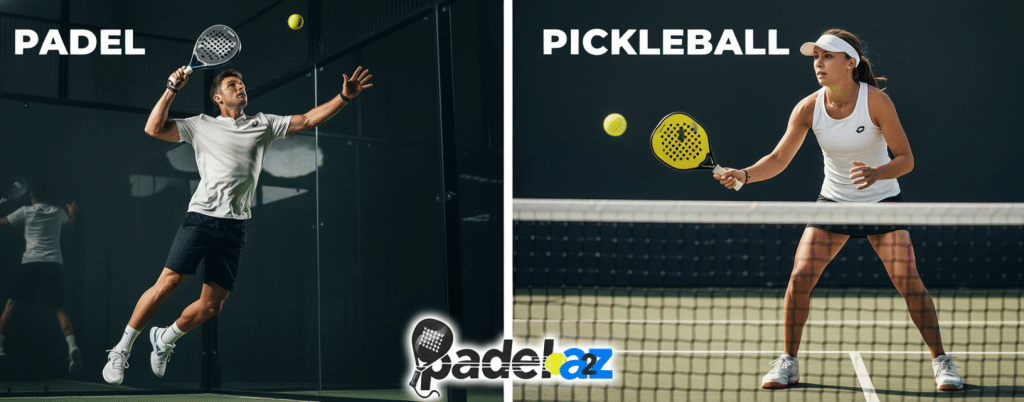
The confusion primarily stems from phonetic similarity. The words “padel” and “paddle” sound almost identical, and both padel and pickleball are racket sports played on courts smaller than a tennis court, often leading newcomers to use the terms interchangeably. While they share some conceptual DNA, they are fundamentally different games, each with its own unique equipment, court, rules, and culture. Understanding these distinctions is the key to appreciating what makes each sport special, and it is the first and most crucial step for anyone looking to enter the world of padel. By providing this definitive answer, PadelA2Z aims to be the first trusted resource for players at the very beginning of their discovery process, building a foundation of knowledge that will support them as they progress in the sport.
Deep Dive: Padel Explained
Padel is a highly sociable racket sport that masterfully combines elements of tennis and squash, creating a unique and compelling gameplay experience. It is almost exclusively played in a doubles format, which is central to its social appeal.
- The Court: A padel court is a rectangle measuring 20 meters long by 10 meters wide, enclosed by a combination of glass walls and metallic mesh fencing. This enclosure is not merely a boundary; it is an active part of the playing area. Much like in squash, players can use the walls to play shots, leading to longer, more strategic rallies and creative angles of attack. The court is divided by a net, with service boxes similar to a tennis court.
- The Racket: The instrument of choice in padel is not a strung racket but a solid, stringless “paddle,” correctly referred to as a padel racket. It is perforated with holes to reduce air resistance and weight and must have a wrist strap that players are required to wear for safety.
- The Ball: At first glance, a padel ball looks identical to a tennis ball. However, it is slightly smaller and has less internal pressure. This lower pressure means the ball is slower and has a lower, more controllable bounce, a characteristic designed to complement the smaller court size and encourage longer rallies.
- The Gameplay: A point begins with an underarm serve that must bounce once before being struck. The scoring system is identical to that of tennis (15, 30, 40, deuce, etc.), which makes it easy for tennis players to pick up. The combination of the slower ball, smaller court, and the ability to play off the walls makes for a game that is less about brute power and more about strategy, patience, and teamwork.
Contrasting with Pickleball: A Different Game Entirely
While often mentioned in the same breath due to its own rapid growth, pickleball is a distinctly different sport from padel.
- The Court: A pickleball court is a flat, hard surface similar to a badminton court, with no walls. The most defining feature is the 7-foot non-volley zone on either side of the net, colloquially known as the “kitchen,” which introduces a unique strategic element not found in padel.
- The Racket: The pickleball “paddle” is a solid-faced racket, larger than a table tennis racket but typically lighter than a padel racket.
- The Ball: The ball used in pickleball is perhaps its most distinguishing feature. It is a lightweight, perforated plastic ball with holes, similar to a wiffle ball, which travels much slower than a padel or tennis ball.
- The Gameplay: Pickleball can be played as either singles or doubles. The serve is also underarm, but the rules for scoring and play are entirely different from padel and tennis. The presence of the “kitchen” dictates a unique style of net play focused on soft shots called “dinks.” As one source notes, they are “fairly different sports when you look closer”.
Clearing the Air: What About Paddle Tennis?
The term “paddle tennis” is another source of confusion, but it generally refers to a historical precursor to modern racket sports. The game most accurately associated with this name is Platform Tennis, a sport invented in the 1920s in the United States. It is played on a raised platform, typically smaller than a padel court, and enclosed by wire screens that are also in play. It is primarily played in colder climates, often during the winter, and uses a solid sponge rubber ball. While it shares the concept of using a solid paddle and playing off walls, it is a distinct sport. In contemporary conversation, especially in Europe and Latin America, when someone refers to “paddle,” they are almost certainly talking about the sport of padel.
Why Choose Padel? The PadelA2Z Perspective
With the distinctions now clear, the question becomes: why has padel, specifically, captured the world’s imagination? The answer lies in a perfect storm of accessibility, social interaction, and athletic satisfaction.
- Rapid Learning Curve: Unlike tennis, where mastering the serve and groundstrokes can take months, new padel players can sustain enjoyable rallies within their very first hour on the court. This immediate sense of accomplishment is a powerful motivator.
- Highly Social: The doubles format and smaller court size place players in close proximity, fostering conversation and camaraderie. A game of padel is often as much a social event as it is a workout.
- Less Physically Demanding: The smaller court means less ground to cover, and the underarm serve reduces the strain on the shoulder. This makes padel less physically taxing than tennis, opening it up to a wider range of ages and fitness levels.
- Strategic Depth: While easy to learn, padel is incredibly difficult to master. The use of walls introduces complex geometries and tactical nuances that keep the game challenging and engaging for even the most advanced players.
At PadelA2Z, we believe padel’s magic lies in this unique combination of accessibility and depth. It’s a sport where beginners can have fun rallies from day one, which is why we’re dedicated to providing the best gear and guidance to get you started on your journey.
Conclusion: Your Journey Starts with Clarity
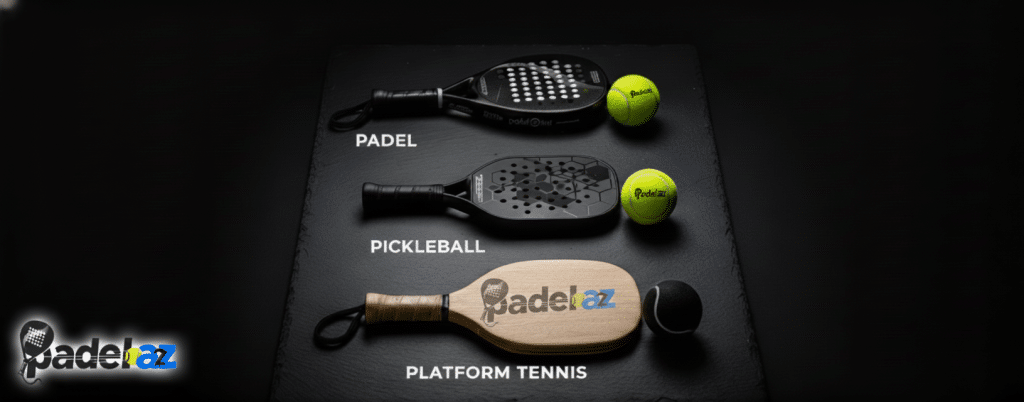
Understanding the fundamental differences between padel vs pickleball, and paddle tennis is the first and most important step toward embracing the sport. Padel stands apart with its unique glass-walled court, underarm serve, and a scoring system borrowed from tennis, creating a game that is strategic, social, and endlessly enjoyable. Now that the confusion has been cleared, the next step is simple: find a local court, grab a racket, and experience the world’s fastest-growing sport for yourself.
| Feature | Padel | Pickleball | Platform Tennis |
| Court | 20m x 10m, enclosed by glass & mesh walls | 13.4m x 6.1m, flat court, no walls | Smaller raised platform with wire screens |
| Racket | Solid, perforated, stringless | Solid, smooth-faced paddle | Solid, perforated paddle |
| Ball | Low-pressure tennis-style ball | Perforated plastic ball | Solid sponge rubber ball |
| Players | Doubles only | Singles or Doubles | Doubles only |
| Serve | Underarm, must bounce first | Underarm | Overhand (one serve) |
| Scoring | Tennis scoring system | Unique point system to 11 | Tennis scoring system |
| Key Feature | Use of glass walls for rebounds | “The Kitchen” non-volley zone | Played on a raised, heated deck |